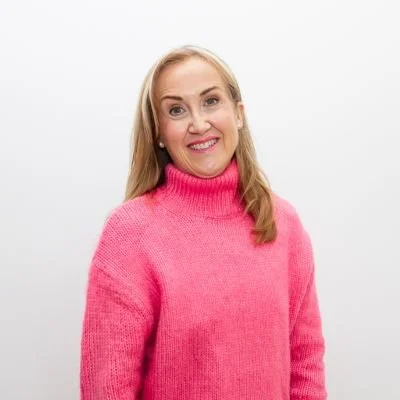
The Art of Client Service, with Robert Solomon

Welcome to Episode 46, with Robert Solomon. He's the author of the must read book for anyone in agency account management, 'The Art of Client Service'.
In this chat, we talked about:
why there are fewer account managers doing more with much less experience
why some people believe the account manager role is becoming extinct and what we both think about that
and why often the work of great account management isn't recognised.
Robert also talks us through his approach to managing difficult client conversations. And we talk about so much more. Robert's book, along with his workshops and his coaching have become foundational to building a new culture of client service and collaboration at many organisations of all different types and sizes and geographies. Robert is the founder of Solomon Strategic, and he provides marketing counsel to ad agencies, clients, and those in marketing looking for behaviour change. Robert, in his career, was a senior executive at several US based international advertising and marketing agencies. He was president and CEO of Rapp New York, president of direct and digital marketing at Ammirati Puris Lintas, General Manager of FCB Direct West and Senior Vice President and associate partner at Digitas.
Here are some great quotes from our chat:
I think so much of great client service work gets done in the moment. And almost doesn't ever get acknowledged. There is that point in a client meeting where a really prescient account person, forget rank for a second, has a sense of not just what's being said, the text of what's being said, but the subtext, what's not being said. And then has the presence of mind in that moment to craft the perfectly calibrated question, which the client may not have even known it needed to ask.
Clients get upset about three things, basically, they get upset about money. I mean, if you reduce client issues, they're about money. They're often about the schedule - meaning money is 'we don't have enough'; schedule - 'there's not enough time'; or the work, 'it's not good enough'. I mean, there are other things that can happen. But they're ancillary.
There is a school of thought that says, account people are becoming extinct as a species. They're caught in this vice between planners on strategy, project management, or execution, and they are losing their sense of self worth and worth to the organisation. How do I add value? And you are quite right to point out, look, you have to add value by being immersed, and conversing in the clients business. But then you quite rightly observed, how do you do that when you're in the weeds of execution? So this is a dilemma with no easy answer. So the future for enlightened agencies, for me, is to acknowledge that account management has never been more important. In an environment where client agency relations are ever more precarious, with clients shifting agencies, as often as they shift channels on the TV every night, you need to be building relationships that are deeper and stronger and more trust based than ever before. And your client service people are the tip of the spear on that.

Everybody has a vested interest in the client relationship. But the person who's at the point is your client service person. And so for me, rather than being diminished as a skill and a value that enlightened agencies should pay attention to it should be elevated, celebrated, and I think you would agree with me better trained. Now, the unenlightened agencies will try to go it alone. But again, to your point, Jenny, the agency that sort of said, well, we don't need to count people we have project people, we have planners, we have creatives. And they said, oh, we suddenly lost some clients. There's something wrong here. I will tell you one story and I'll let you move on to the next question. Martin Puris years ago, he came from an agency that was known as Ally and Gargano. Very, very famous agency in the last century, did some legendary commercials for Federal Express, 'Fast talking Man', and Martin said to me, you know, when Ralph and I founded (he said this to me personally) he said, look, Robert, when I founded this agency, Ally and Gargano was a great shop, we did wonderful creative, but six months later, we had to go find new clients. It was like a shopping bag with the bottom out of it. We put things in the top and it fell out of the bottom. He said Ralph and I didn't want that agency. We don't want to be a creatively driven shop. We don't want to be an account driven shop. We don't want to be one of those shops. We want to be a balanced shop. We want to have a balance between both because we think account people are utterly central to doing really, really good work for clients. They were way ahead of their time in this set. So enlightened agencies getthis, unenlightened ones don't. The future should be quite bright. Except I'm a little worried, honestly. Because you get into this doom loop. You don't train your people, they don't add value say they're not necessary, you eliminate them. This is something that we actually have to reverse. Jenny 45:17I absolutely 100% agree with this. What you've just said is just spot on. I think another additional thought here is, I looked atbecause I'm doing some research, the top four fastest growing biggest digital agency networks in the world right now by revenue are all management consultancies. Three out of the top four are management consultancies, Deloitte, Accenture, PwC, what are management consultants good at? Consulting. Navigating organisations, making their way to the C Suite, they have that skill set, they're very good at what they call 'land and expand'. And if we are facing or coming up against these types of shops, because Accenture has been certainly one of the most acquisitive management consultancies, they're buying up, Droga 5, they've bought up all of these agencies, they've got not only the consultancy cloud, they've got the creative cloud. So we need really well trained account managers at the forefront of our business, who do have those consulting skills, because during COVID, you've probably come across this as well, but procurement has become more and more important for clients. They've risen to the top. The CPO position I read recently didn't exist 10 years ago, but now it's ever more present. So they are becoming more central to purchasing power and looking at their supply network and making sure they get the value. So we do need to be nurturing relationships. Robert 46:57Oh, absolutely. I will make an observation here. I think Accenture appointing Dave Droga to run that organisation is shot across the bow to every big advertising agency holding company in the world. Because the one thing that was missing at Accenture was the creative piece. And in Dave Droga, they've essentially tried, I'm not saying they've solved it, but they went a long way in terms of establishing a credential by appointing him the global chairman. And so I think that's a real wake up call for holding companies that are paying attention to this. And I agree with you. You know, it's funny, McKinsey, not one of the consulting companies you alluded to, because you talked about the other three, and I'm very much aware of Accenture here in the United States. but McKinsey always had, what they would do, you talk about land and expand, and what were they notorious for? They would go into a company and they'd have their consultants live there. And my client at American Express was a guy named Ken Chenault. What was Ken Chenault before he joined American Express? He was a McKinsey consultant. What McKinsey does is they they literally seed their consultants into the organisation. And at some point, the McKinsey consultant becomes the CEO. And of course, what does that CEO do? The first thing, they bring McKinsey in to actually help them. This is their land and expand strategy. And by the way, I mean, I know Ken Chenault, he's a wonderful CEO, which is really excellent. But this isn't the only example of McKinsey actually, their consultants ascending to the ranks of actually leaving the organisation. Another American Express one is Lou Gerstner, who actually left American Express at a certain point, what did he become the head of: IBM? What was he before he was a McKinsey consultant. The guy who runs on Omnicom, John Wren, what was he? He was an Arthur Andersen accountant. Before Andersen became Accenture. People don't realise how the consulting firms have infiltrated the advertising business. And they brought their consulting skills into the ad business. And of course, the consultants have a seat at the C level table and agencies have been so diminished, they've been pushed down in the organisation, they're at best mid level. Although I will tell you the best relationships that do the best work there's a connection between the CEO and the agency There's an enlightened CEO understands the value of advertising and marketing. Jenny 50:04I was gonna ask you actually, do you have any examples of where agencies do have a seat at the C suite table? Robert 50:10Well, the two that I are not with me, but certainly I know them, certainly with Phil Knight who runs Nike, the huge global brand and Dan Wieden of Wieden+Kennedy, that relationship has, I mean, basically Wieden was a little agency in Portland, Oregon. And Phil Knight was a shoe company selling shoes out the back of his car. And today, they're both enormously well, Nike's a global brand and Wieden+Kennedy's a huge and important agency. That's one example. The other example, of course, is Steve Jobs with Lee Clow, and originally Steve Hayden, and then later with other people, I don't even know who actually it was really Lee Clow, who, who's who just retired, who had an enormously tight relationship with Steve Jobs, an enormously mercurial figure who they were able to figure out. So these are two really, really good examples. I will tell you, I'll give you a third example. So Lou Gerstner goes to IBM. You probably know about this. He goes to IBM and within six months, he does the world's biggest account transition. He moves all of his advertising agency work. Where does he go to? He goes to Ogilvy and Mather. And what was the connection well Lou Gerstner? He joined from American Express and who does he bring over? He brings over a woman named Abby Kohnstamm, who was his chief of staff. She was my client for a while. Abby Kohnstamm he brings over to IBM, who does Abby go to? She goes to her good friend, Shelley Lazarus, who was at that point, I think, was working for Charlotte Beers. She was the number two she ultimately became the very powerful and effective Chair of Ogilvy. She does, without a review, she transitions, IBM to Ogilvy. This was enormous. Now I'll give you another example from my own experience. My colleague, Tom Nelson, godspeed, he just recently ascended to the advertising agency in the sky, I just wrote about him. But Tom and I went up to Canada with a bunch of other people to pitch the Labatt account. And the CEO at the time after Tom had finished the presentation turned to Tom and said we will do business together and he moved Labatt back to Ammirati. We opened our office in Toronto, Tom Radin and Tom had an enormously tight relationship with the Labatt CEO. There are these are examples of a tight connection between the organisation's CEO and a very senior advertising personnel. Labatt's not the size of IBM, or an Apple or Nike. But these are all examples. I can give you another example. I mean, Pat Fallon, Fallon McElligott, with United Airlines, very tight relationship at the top, basically survived when Fallon created the world's most god awful advertising, which was the United Rising campaign, it's in my book, it survived. Because why? Because of the relationship. So yes, there are examples of this, and there should be more of them. There absolutely should be more of them. Jenny 53:35Well, there's a gem of an idea there for agency leaders actually, listen, Robert, I'm very conscious of your time. And I think we need to do a part two. So I need to get you back because I just feel like we could just talk forever, because you're just such on my wavelength. Before we wrap up do you have any kind of parting words of wisdom for an agent, agency account manager who's listening to this and is seeking - help me with my career? What would say to them to give them some advice or inspiration? Robert 54:16Well, the first thing I want to do is I want to acknowledge they have an incredibly hard job, and an incredibly thankless job. And they're not getting a whole lot of help. So I would say to them, look, stay the course. There was a young account guy who came to me, he was out of college, and he was just starting and he said, what advice would you give us said, look, don't give up, do not give up. Do not accept defeat, you have to be resilient. So I would say to most account people, I don't know how inspiring it will be. The thing that will serve you well as you go through your career, is that you are resilient in the face of obstacles, you won't be defeated, you will learn, you won't be defeated. And you will be consistent, be consistent. And I will leave you with a quote. I don't know if you are familiar with a guy named Jordan Peterson. He wrote a pretty well known book called '12 Rules for Life'. Now, I am not a Jordan Peterson fan for a whole lot of reasons. But there was one quote, and we could talk about that, it's a separate moment. There's one quote that he said that really struck me, he said,' attend to the day, but aim for the highest good'. Now what's attend to the day? Take care of business, do the things that you need to do, the very basic things that clients need expect and want from you, but then aim for the highest good, which is what you were alluding to, which is aspire to be something that your clients cannot do without. So that the first person they call, when they have a problem, or an issue they want to talk through isn't their consulting firm, it isn't someone else in the business, they call you. Because they want to talk it through with you. Because you have become that you have become the kind of trusted colleague, consigliere to them that they so desperately need. And they, instead of dreading your calls, they welcome your calls, and they want to they seek you out. This is when you sort of reached Nirvana. And oh, by the way, you know, you have reached the exalted land, the Promised Land of account service, when someone in the agency has an issue or a problem or something they want to talk to, they come to you, because you are the person who they want to converse with. Doesn't matter what your title is, I don't care how big your office is, you are the person who they most rely on for the kind of sound thoughtful, measured, balanced, and occasionally inspiring advice. The person who listens really well, as you are doing with me today, kudos to you, and asks the right questions, those are the things that really matter. Jenny 57:22I think that's hugely inspiring. I was listening to that feeling very inspired myself. So thank you, thank you for sharing that. And Robert, thank you so much for joining me. It's been a long time coming and I just can't believe I hadn't invited you sooner. How can people reach you because you've mentioned so many things that you're doing, which I think are hugely valuable for agencies and obviously we're all working in a remote world. So how what's the best way people can contact you? Robert 57:53I'll tell you a funny story and then I really will let you go. So I'm doing the third edition of my book and I put my email address in my bio and the editor comes back to me, the John Wiley editor comes back said no no no, we don't really want that there because people will get in touch with you. I said what do you mean, you don't want it there? I do want it there, I want people to get in touch with me. I want to be the most visible person in the planet. My point is I do want to be in touch with people. I so welcome people who email me and every LinkedIn message I get I respond to, every Facebook message I respond to, every Twitter message I respond to. You can find this pretty easily if you google Robert Solomon, you'll find it but it's robert@solomonstrategic.com. If you email me and you want to talk with me, no problem. My phone number is very public and in the United States, and we can do a Zoom call much the way you and I are doing a Zoom call. I am always happy to get on the phone with people to talk with them. I'm always happy to try to answer questions. There was a there was a professor at the University of Canberra, her name is Sally Webster and years ago she reached out to me so my students need help so I became an informal mentor to people at the university campus even though they were 15 hours away from m,e I was in New York at the time. They're a little closer now. And I just wanted to help them so they would ask me questions, I would do answers I wouldn't be on the phone with them or I wouldn't do zoom calls with them. But I would talk with them by email all the time to try to help them because I'm a hugely invested in this journey. I want account people to succeed, I genuinely do. And I want, to the extent I can, to try to help them solve the problem so if they can't afford to hire me as a coach or they can't do a workshop with me and say, look, if you've got 15 bucks, you can buy my book. And that's a pretty good investment. And if that doesn't work, just write me, I'll write you back. Jenny 1:00:05Your passion just shines through. And I can see why you were such a brilliant account person, Robert. Absolutely wonderful, and I'm sure people will get in contact with you, because you've just been absolutely charming and so knowledgeable and this book is iconic. You even mentioned that you were also mentoring people who were older in their careers, and they're looking to make career changes. You mentioned that at the beginning, which is again, fantastic. You're such a giving person which is so lovely. But if anyone hasn't read this book, 'The Art of Client Service', I highly recommend you read it because it absolutely is the industry Bible for account managers. So Robert, thank you. Thank you so much for joining me, this has been superb. Robert 1:00:52I loved it. I look forward to chatting again. Jenny 1:00:56Thank you.