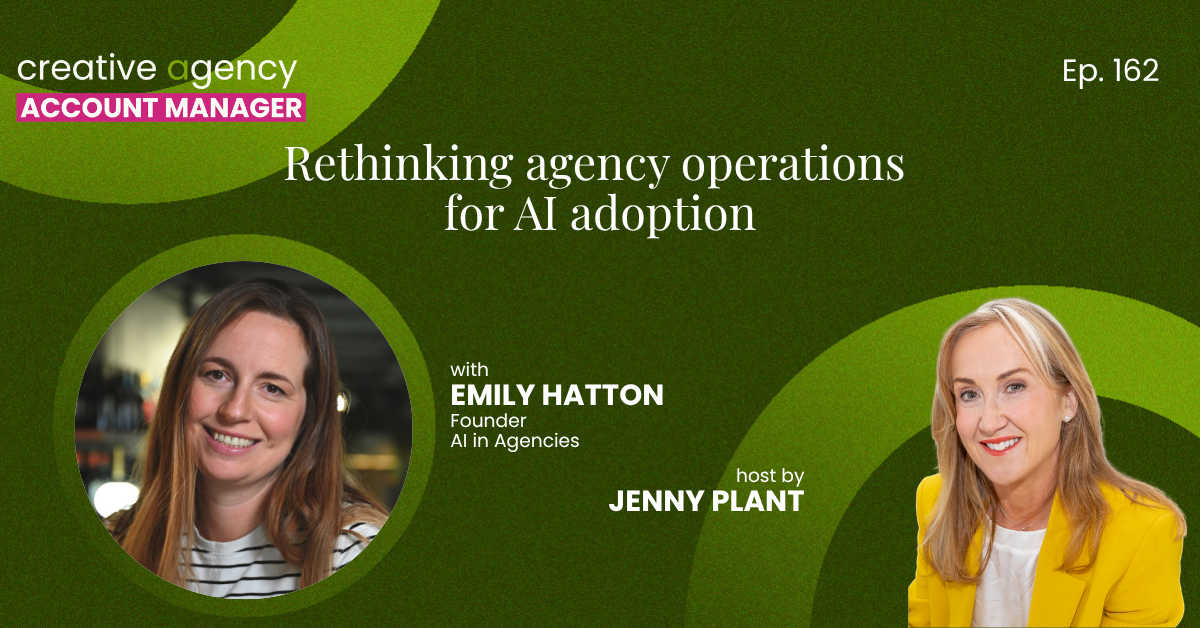
Welcome to episode 162. If your agency is experimenting with AI, buying new tools and still feeling like not much has really changed operationally, you're not actually imagining it. That is exactly what this episode gets into.
I'm chatting with Emily Hatton, a Business Operations Consultant and the founder of AI in Agencies, where she helps agencies turn AI from scattered experiments into structured, profitable ways of working. After years supporting service businesses with operations, capacity planning and profitability, Emily saw a growing gap: agencies were adopting AI tools quickly, but their operating models hadn’t caught up. Today, she works with agency founders and leadership teams to integrate AI into workflows, resourcing, pricing and delivery — helping teams save time, improve margins and get more value from the tools they already pay for. Her work focuses on practical implementation, not hype, and on helping agencies build sustainable AI capability inside their teams.
In this conversation, Emily and I talk about why AI adoption so often becomes a bit chaotic inside the agency. Different teams using different tools, no real ownership and not enough measurement of whether any of it is actually saving time or improving the work.
We also get into why the smarter starting point is actually to look at your processes and workflows, not the latest tool that you can get, but how to get more from the actual tools you're already using, your tech stack.
And finally, we talk about governance, client trust, pricing pressure, and what agencies need to sort out now if they want to stay commercially relevant.
If AI in your agency currently feels a little bit messy, a bit exciting, but also a bit overwhelming all at the same time, then this one is for you.
You can contact and connect with Emily here:
www.linkedin.com/in/emily-hatton
https://aiinagencies.com/
How AI-ready is your account management team? Find out in 3 minutes with our free quiz - and discover where your biggest growth opportunities lie.
Rethinking agency operations for AI adoption

Previous
Previous
Your eight week commercial window
Next
Next